What does a modern AI sales tech stack look like?
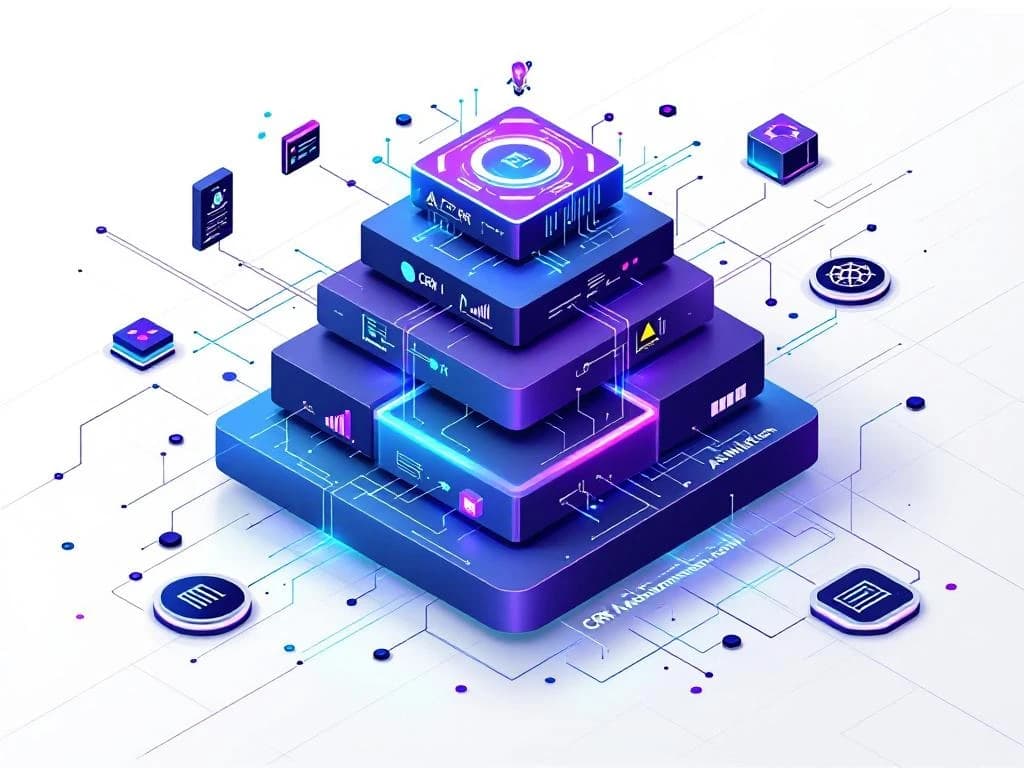
A modern AI sales tech stack combines intelligent automation tools that work together to find prospects, engage them personally, and turn conversations into sales. The foundation includes AI-powered CRM systems, lead scoring platforms, conversation intelligence software, and automated outreach tools. These technologies help sales teams work more efficiently while maintaining the personal touch that drives B2B relationships. This guide answers the most important questions about building and implementing an AI sales technology stack.
What exactly is an AI sales tech stack and why do you need one?
An AI sales tech stack is a collection of artificial intelligence-powered tools that automate and optimize your sales processes from lead generation to deal closure. Unlike traditional sales tools that simply store data, AI sales technology actively learns from your interactions, predicts outcomes, and suggests actions that improve your results.
The core components work together to create a comprehensive sales ecosystem. Your CRM becomes the central hub where AI analyzes customer data and buying patterns. Lead scoring platforms use machine learning to identify your best prospects automatically. Conversation intelligence tools analyze your calls and emails to suggest better messaging. Automated outreach systems personalize communications at scale while maintaining authentic connections.
You need this integrated approach because modern buyers expect personalized experiences, but manual personalization doesn't scale. AI sales tools solve this challenge by handling repetitive tasks while providing insights that make your human interactions more effective. Teams using AI sales technology typically see faster response times, better lead qualification, and higher conversion rates because they can focus on relationship building rather than administrative work.
Which AI tools are absolutely necessary for your sales stack?
The foundation of any effective AI sales stack includes five core technologies that handle different aspects of your sales process. Start with these tools before adding specialized solutions for your specific needs.
An AI-powered CRM system serves as your central command center. Modern CRMs use artificial intelligence to track customer interactions, predict deal outcomes, and suggest next steps. They automatically log emails, calls, and meetings while providing insights about customer behavior patterns.
Intelligent lead scoring platforms rank your prospects based on their likelihood to buy. These tools analyze hundreds of data points, including website behavior, email engagement, and company characteristics, to prioritize your outreach efforts. This helps you focus on prospects who are most likely to convert.
Conversation intelligence software records and analyzes your sales calls, identifying successful talk tracks and areas for improvement. It provides real-time coaching suggestions and tracks key conversation metrics that correlate with closed deals.
Automated email sequencing tools create personalized follow-up campaigns that adapt based on prospect responses. These platforms use natural language processing to craft messages that sound human while maintaining consistency across your team.
Predictive analytics solutions identify patterns in your sales data to forecast revenue, spot at-risk deals, and recommend actions that increase win rates. These insights help you make better decisions about resource allocation and strategy adjustments.
How do you integrate AI sales tools without disrupting your current workflow?
Successful AI sales tool integration requires a phased approach that gradually introduces new capabilities while maintaining your existing sales momentum. Start by mapping your current processes and identifying the biggest pain points where AI can provide immediate value.
Begin with a comprehensive audit of your existing workflow. Document how leads currently flow through your system, where bottlenecks occur, and which tasks consume the most time. This assessment helps you prioritize which AI tools will deliver the fastest return on investment.
Implement one tool at a time rather than overhauling your entire system simultaneously. Start with your CRM upgrade, since this affects data collection for all other tools. Once your team adapts to the new CRM capabilities, add lead scoring functionality. Follow with conversation intelligence, then automated outreach tools.
Plan thorough training sessions for each new tool introduction. Most AI sales platforms require 2–4 weeks for teams to become comfortable with new features. Provide hands-on training sessions, create quick reference guides, and designate power users who can support their colleagues during the transition.
Maintain parallel systems during the initial implementation phase. Keep your old processes running while testing new AI capabilities with a subset of leads or team members. This approach reduces risk and allows you to fine-tune configurations before full deployment.
Monitor adoption rates and gather feedback regularly. Track usage metrics for each tool and address resistance quickly. Many integration challenges stem from unclear value propositions rather than technical difficulties.
What's the difference between basic automation and intelligent AI sales tools?
Basic automation follows predetermined rules and triggers, while intelligent AI sales tools learn from data and adapt their behavior based on outcomes. Traditional automation sends the same email to everyone on a list, but AI personalizes each message based on individual prospect characteristics and previous interactions.
Rule-based automation requires manual setup for every scenario you want to address. You create if-then logic that triggers specific actions when certain conditions are met. While useful for simple tasks, this approach becomes unwieldy as your sales process grows more complex.
AI-powered tools use machine learning algorithms that improve performance over time. They analyze successful interactions to identify patterns that lead to positive outcomes. Instead of following rigid rules, they make intelligent decisions based on probability and historical data.
Natural language processing distinguishes advanced AI tools from basic automation. While traditional tools might insert a first name into an email template, AI systems analyze prospect communication styles and adjust tone, length, and messaging approach accordingly.
Behavioral analysis represents another significant difference. Basic automation might track email opens and clicks, but AI tools interpret these signals within broader context. They consider factors like time of engagement, device used, and sequence of actions to predict buyer intent more accurately.
Adaptive personalization sets intelligent tools apart from static automation. AI systems continuously refine their approach based on response data, testing different messaging strategies and optimizing for better results without manual intervention.
How do you measure the ROI of your AI sales tech investments?
Measuring AI sales technology ROI requires tracking both efficiency gains and revenue improvements across your entire sales funnel. Focus on metrics that directly correlate with business outcomes rather than vanity metrics that look impressive but don't impact your bottom line.
Start with lead quality improvements by comparing conversion rates before and after AI implementation. Track how many leads progress from initial contact to qualified opportunity, and measure the time reduction in lead qualification processes. Quality improvements often provide more value than quantity increases.
Monitor sales cycle reduction across different deal sizes and customer segments. AI tools typically accelerate deals by providing better prospect insights and suggesting optimal timing for follow-ups. Calculate the revenue impact of closing deals faster, including the opportunity to work more deals within the same timeframe.
Track productivity gains by measuring activities per sales representative. Count calls made, emails sent, and meetings scheduled before and after AI implementation. However, balance activity metrics with quality indicators to ensure increased volume doesn't sacrifice relationship building.
Analyze conversion rate improvements at each stage of your sales funnel. AI tools should increase the percentage of leads that become opportunities, opportunities that become proposals, and proposals that close successfully. Even small percentage improvements compound significantly across your entire pipeline.
Calculate cost savings from reduced manual work. Measure time spent on data entry, lead research, and follow-up scheduling before and after automation. Multiply time savings by your team's hourly cost to quantify efficiency benefits.
Review customer acquisition costs and lifetime value changes. Effective AI implementation should reduce the cost to acquire new customers while potentially increasing their long-term value through better initial qualification and relationship building.
What role does LinkedIn automation play in a modern sales tech stack?
LinkedIn automation serves as a powerful component in modern sales stacks by enabling personalized outreach at scale while building authentic professional relationships. Unlike other social platforms, LinkedIn provides direct access to decision-makers and detailed professional information that AI can use to craft relevant messaging.
Modern LinkedIn automation goes beyond simple connection requests and message templates. AI-driven platforms analyze prospect profiles, company news, and mutual connections to create contextual outreach that feels personal and relevant. This approach transforms cold outreach into warm conversations by establishing familiarity before direct engagement.
Integration with your broader sales stack amplifies LinkedIn's effectiveness. When LinkedIn automation tools connect with your CRM, lead scoring systems, and conversation intelligence platforms, they create a comprehensive view of prospect engagement across all touchpoints. This integration ensures consistent messaging and prevents duplicate outreach efforts.
Advanced LinkedIn automation platforms use sophisticated AI to mimic human behavior patterns, ensuring your outreach appears natural and authentic. They vary timing, personalize messaging based on prospect characteristics, and adapt communication styles to match successful interaction patterns.
We've developed our AI-driven campaign automation system to address these exact needs. Our platform combines intelligent prospect research with personalized outreach that builds genuine relationships before making sales pitches. This approach, which we call parasocial selling, creates familiarity and trust that dramatically improves response rates.
The key advantage lies in relationship building rather than just lead generation. Effective LinkedIn automation nurtures prospects through valuable content sharing and thoughtful engagement before introducing sales conversations. This foundation creates stronger relationships and higher conversion rates compared to direct sales approaches.
If you're ready to transform your LinkedIn outreach with intelligent automation that builds authentic relationships, explore our pricing options to find the solution that fits your sales goals and team size.
Frequently asked questions
How long does it typically take to see results from implementing an AI sales tech stack?
Most teams see initial productivity improvements within 2-4 weeks of implementing their first AI tool, but significant ROI typically emerges after 2-3 months once the AI systems have enough data to learn from. Lead quality improvements and conversation insights appear first, followed by measurable increases in conversion rates and deal velocity as your team becomes proficient with the tools.
What's the biggest mistake teams make when building their AI sales stack?
The most common mistake is implementing too many tools simultaneously without proper integration planning. This creates data silos and workflow confusion that actually reduces productivity. Instead, start with one core tool (usually your CRM), ensure it's fully adopted and integrated, then gradually add complementary tools that enhance rather than complicate your existing processes.
How much should a small sales team budget for an effective AI sales tech stack?
A small team of 3-5 salespeople should budget $200-500 per user per month for a comprehensive AI sales stack, including CRM, lead scoring, conversation intelligence, and automation tools. Start with essential tools at the lower end of this range and scale up as you prove ROI. Many platforms offer tiered pricing that grows with your team size and needs.
Can AI sales tools work effectively with complex, long sales cycles?
Yes, AI tools are particularly valuable for complex B2B sales cycles because they excel at tracking long-term prospect engagement patterns and identifying subtle buying signals over extended periods. They help maintain consistent touchpoints, predict when prospects are ready to advance, and ensure no opportunities fall through the cracks during lengthy decision processes.
How do you ensure AI-generated outreach messages don't sound robotic or impersonal?
Focus on AI tools that use advanced natural language processing and allow extensive customization based on your brand voice and successful message templates. The best approach combines AI efficiency with human oversight—use AI to personalize and scale your proven messaging frameworks rather than generating completely automated content. Always review and refine AI suggestions to maintain authenticity.
What data privacy considerations should we be aware of when implementing AI sales tools?
Ensure your AI sales tools comply with GDPR, CCPA, and other relevant privacy regulations by choosing vendors with proper data encryption, consent management, and data retention policies. Review how each tool collects, stores, and processes prospect data, and establish clear protocols for data sharing between integrated platforms. Always obtain proper consent for automated outreach and provide easy opt-out mechanisms.
How do you handle team resistance when introducing AI sales tools?
Address resistance by clearly demonstrating how AI tools eliminate tedious tasks rather than replacing human skills, allowing your team to focus on relationship building and strategic selling. Provide comprehensive training, start with your most enthusiastic team members as champions, and share early wins and success stories. Most resistance dissolves once salespeople see how AI tools make their jobs easier and more successful.