How do AI tools adapt to buyer personas?
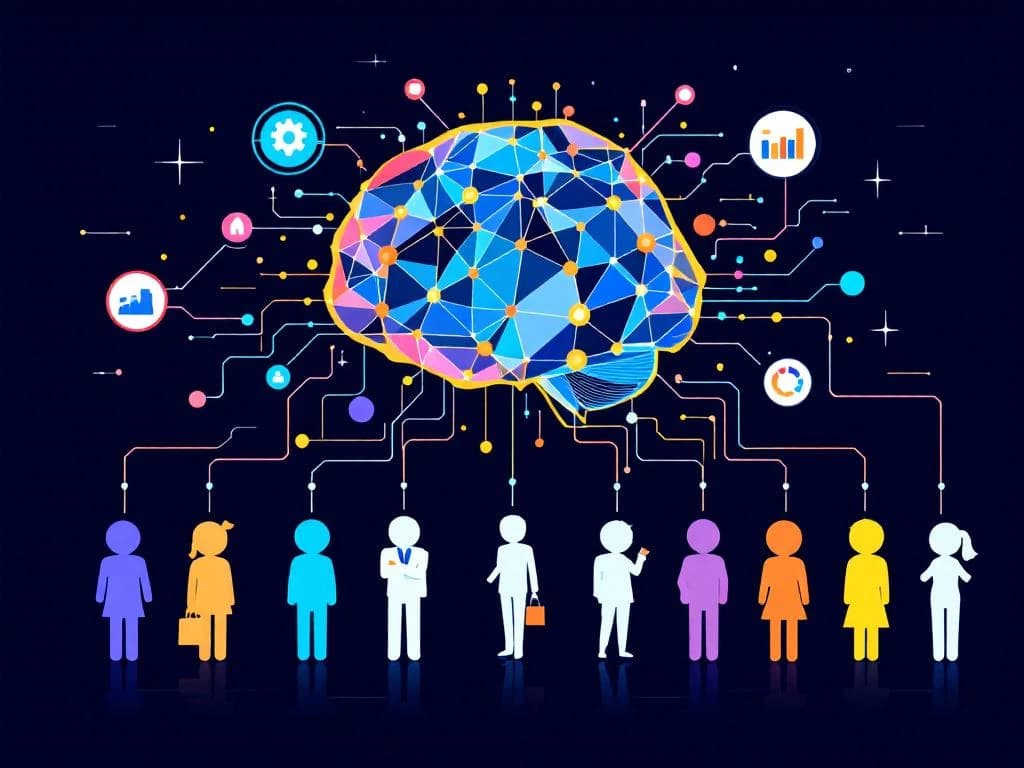
AI tools adapt to buyer personas by analysing data patterns and behaviours to create personalised approaches for different customer types. They use machine learning algorithms to continuously refine their understanding of each persona’s preferences, communication styles, and decision-making patterns. This enables automated systems to deliver more relevant messaging, timing, and content that resonates with specific audience segments, ultimately improving conversion rates and customer engagement.
What are buyer personas and why do AI tools need them?
Buyer personas are detailed profiles representing your ideal customers, including demographics, behaviours, pain points, and motivations. AI tools use these frameworks to understand target audiences better, customise messaging appropriately, and improve conversion rates through data-driven personalisation that feels authentic rather than generic.
Think of buyer personas as character profiles for your best customers. They include information such as job titles, the challenges they face, their preferred communication styles, and their buying behaviours. When you feed this information into AI systems, those systems can make smarter decisions about how to approach each type of prospect.
AI tools need buyer personas because they provide the foundation for intelligent automation. Without clear persona definitions, AI systems resort to one-size-fits-all approaches that often feel impersonal and irrelevant. With well-defined personas, AI can adapt its communication style, timing, and content to match what each audience segment actually wants to hear.
AI sales tools become significantly more effective when they understand the difference between reaching out to a busy CEO and a detail-oriented procurement manager. Each persona requires different messaging strategies, and AI can learn to recognise and adapt to these differences automatically.
How do AI tools actually learn about your buyer personas?
AI tools learn about buyer personas through behavioural tracking, engagement analysis, demographic information, and interaction patterns. They collect data from email opens, website visits, social media activity, and response patterns to build comprehensive profiles that become more accurate over time through continuous learning algorithms.
The data collection process happens across multiple touchpoints. When someone visits your website, the AI notes which pages they view and how long they stay. If they engage with your content on LinkedIn, it tracks what types of posts they interact with. Email behaviour reveals preferences around timing, subject lines, and content types.
Modern AI systems excel at pattern recognition. They identify that certain job titles tend to respond better to specific messaging styles, or that prospects from particular industries prefer detailed information over high-level overviews. This pattern recognition becomes the foundation for persona adaptation.
AI outreach platforms analyse response rates and engagement metrics to refine their understanding continuously. If messages to marketing directors perform better when sent on Tuesday mornings with case study content, the AI learns this pattern and applies it to similar prospects.
What types of personalisation can AI create for different buyer personas?
AI creates personalisation through content customisation, messaging tone adaptation, timing optimisation, channel selection, and dynamic campaign adjustments. It can modify everything from email subject lines and message length to the specific benefits highlighted, ensuring each persona receives communication that matches their preferences and decision-making style.
Content personalisation goes beyond inserting someone’s name into a template. AI can adjust the entire message structure based on persona characteristics. Technical buyers might receive detailed feature explanations, while executive personas get high-level business impact summaries.
Timing personalisation considers when different personas are most likely to engage. AI might learn that procurement professionals respond better to messages sent early in the week, while creative directors engage more with content shared on Friday afternoons.
Channel personalisation helps determine whether to reach someone through email, LinkedIn messages, or other platforms. Some personas prefer formal email communication, while others respond better to casual LinkedIn interactions.
AI leads benefit from dynamic campaign adjustments, where the AI modifies follow-up sequences based on initial responses. If someone downloads a technical whitepaper, the AI might shift them into a more detailed nurture sequence rather than continuing with general awareness content.
How does AI adapt its approach when buyer personas change over time?
AI adapts to persona evolution through continuous learning, real-time data analysis, and adaptive algorithms that detect shifts in customer behaviours and preferences. The system monitors performance metrics and engagement patterns to identify when established persona assumptions no longer hold true, then automatically adjusts strategies accordingly.
Buyer personas naturally evolve as markets change, new technologies emerge, and business priorities shift. What worked for reaching marketing managers two years ago might not resonate today. AI systems track these changes by monitoring declining response rates, shifting engagement patterns, and new behavioural trends.
The adaptation process happens gradually rather than through sudden changes. AI algorithms notice when certain message types start performing poorly with specific personas, or when new content formats begin generating better engagement. These insights trigger automatic adjustments to messaging strategies.
Real-time learning means the AI doesn’t wait for quarterly reviews to update its approach. If a particular persona segment starts responding better to video content instead of text-based messages, the system begins incorporating more video elements into future communications.
AI lead generation becomes more effective over time because the system continuously refines its understanding of what motivates different persona types. This ongoing optimisation ensures your outreach stays relevant even as your target audience evolves.
How can you maximise AI persona adaptation for your business?
Maximise AI persona adaptation by setting up proper data collection systems, defining clear buyer personas with specific characteristics, choosing platforms that offer advanced personalisation features, and regularly reviewing performance metrics. Start with detailed persona research, then implement AI tools that can learn from your specific audience behaviours and preferences.
Begin by documenting your current buyer personas in detail. Include demographic information, communication preferences, pain points, and buying behaviours. The more specific you can be, the better AI tools can adapt their approaches. Don’t just list job titles — describe how these people actually make decisions and what influences them.
Choose AI platforms that offer robust learning capabilities rather than basic automation features. Look for systems that can track multiple data points, analyse engagement patterns, and adjust strategies automatically based on performance data.
Set up proper tracking and data collection from the start. This includes website analytics, email engagement metrics, social media interactions, and response tracking. The quality of your data directly impacts how well AI can adapt to your personas.
We’ve built our AI-driven campaign automation system specifically to excel at persona adaptation for LinkedIn outreach. Our platform learns from every interaction to refine its approach for different buyer types, ensuring your messages feel personal and relevant rather than automated.
Regular performance reviews help you understand how well the AI is adapting to your personas. Monitor response rates, engagement metrics, and conversion data across different persona segments. This information helps you refine your persona definitions and improve AI performance over time.
If you’re ready to implement AI that truly adapts to your buyer personas, get in touch with our team to discuss how our platform can transform your LinkedIn outreach through intelligent persona-based automation.
Frequently asked questions
How long does it take for AI to learn and adapt to my buyer personas effectively?
Most AI systems begin showing initial adaptation within 2-4 weeks of implementation, but meaningful persona refinement typically takes 60-90 days of consistent data collection. The timeline depends on your outreach volume and data quality - businesses with higher engagement rates and clearer initial persona definitions see faster results.
What's the minimum amount of data needed before AI can start personalising for different personas?
You'll need at least 100-200 interactions per persona segment to establish reliable patterns, though basic personalisation can begin with as few as 50 data points. Focus on quality data collection from the start - detailed engagement tracking and response analysis matter more than sheer volume.
Can AI persona adaptation work if I'm targeting multiple industries with different buyer types?
Yes, AI actually excels at managing complex, multi-industry targeting by creating sub-personas within broader categories. The system can identify industry-specific patterns while maintaining persona-based personalisation, though you'll need larger data sets to achieve statistical significance across all segments.
What are the most common mistakes businesses make when setting up AI persona adaptation?
The biggest mistakes include creating overly broad personas, insufficient data tracking setup, and expecting immediate results. Many businesses also fail to regularly update their persona definitions or don't provide enough initial training data for the AI to work with effectively.
How do I know if my AI is actually adapting to personas or just sending generic messages?
Monitor your analytics for varying response rates across persona segments, different message structures being sent to different audience types, and improving performance metrics over time. True persona adaptation should show measurably different engagement patterns and messaging approaches for each buyer type.
Should I create separate AI campaigns for each buyer persona or use one adaptive campaign?
Start with one adaptive campaign that can learn to differentiate between personas automatically - this approach provides more data for the AI to work with and prevents audience overlap issues. Only split into separate campaigns if you have significantly different value propositions or completely distinct buying processes for each persona.
What happens if my AI misclassifies a prospect into the wrong buyer persona?
Modern AI systems self-correct through engagement feedback - if someone responds poorly to messaging designed for their assumed persona, the system learns and adjusts their classification. You can also manually override persona assignments and provide feedback to improve future accuracy, helping the AI learn from its mistakes.