Do B2B buyers actually respond to LinkedIn lead generation messages?
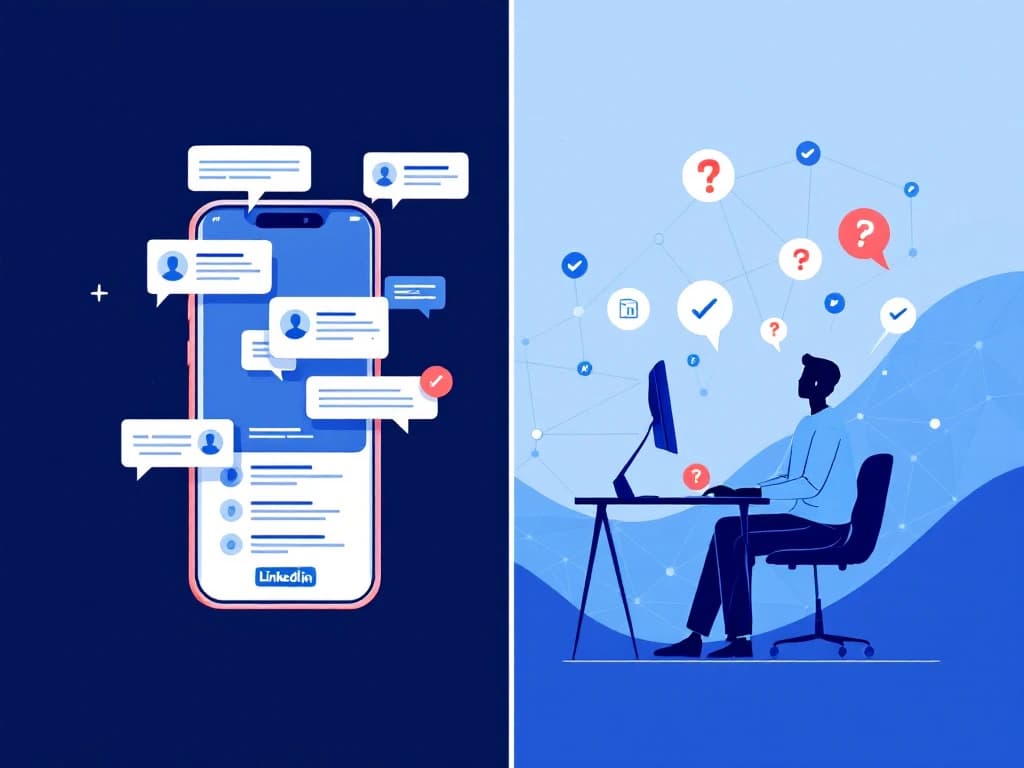
Yes, B2B buyers do respond to LinkedIn lead generation messages, but response rates vary dramatically based on message quality, timing, and personalisation. While most generic outreach gets ignored, well-crafted messages that demonstrate genuine value and relevance can achieve meaningful engagement. The key lies in understanding buyer behaviour patterns and creating messages that feel authentic rather than automated.
Do B2B buyers actually open and read LinkedIn messages from strangers?
B2B professionals do open and read LinkedIn messages from strangers, particularly when the sender appears credible and the message preview suggests relevance. Most decision-makers check their LinkedIn messages regularly as part of their professional routine, though they're increasingly selective about which messages deserve their attention.
The opening behaviour depends heavily on several factors. Profile credibility plays a huge role - buyers are more likely to open messages from people with complete profiles, relevant industry experience, and mutual connections. The message preview also matters enormously, as the first few words determine whether someone clicks through or archives immediately.
Timing influences reading patterns too. Messages sent during business hours on weekdays typically see better open rates than those sent evenings or weekends. However, the most important factor is relevance. Buyers quickly scan for signs that the sender understands their business, industry, or current challenges before deciding whether to engage further.
What makes B2B buyers respond to LinkedIn lead generation messages?
B2B buyers respond to LinkedIn messages that demonstrate clear value, genuine personalisation, and respect for their time. The most effective messages reference specific details from the buyer's profile or company, offer concrete solutions to likely challenges, and make reasonable requests rather than pushing for immediate sales conversations.
Personalisation beyond basic details makes the biggest difference. Rather than simply mentioning someone's job title or company name, effective messages reference recent company announcements, industry challenges, or shared connections. This shows you've invested time in understanding their situation rather than sending mass outreach.
Value proposition clarity also drives responses. Buyers want to understand quickly what you're offering and why it matters to them specifically. Messages that lead with insights, helpful resources, or solutions to problems they're likely facing generate more engagement than those focused on your product features.
The request itself needs to feel reasonable and low-pressure. Asking for a brief conversation to share relevant insights works better than immediately requesting a sales meeting. Buyers appreciate when you acknowledge their busy schedules and suggest flexible ways to connect.
Why do most LinkedIn lead generation messages get ignored by B2B buyers?
Most LinkedIn lead generation messages get ignored because they feel generic, pushy, or irrelevant to the recipient's actual needs. Buyers can immediately spot template messages that could have been sent to anyone, and they delete these without reading further. Poor targeting and aggressive sales language also trigger immediate dismissal.
Generic templates represent the biggest problem in LinkedIn outreach. Messages that start with "I hope this message finds you well" or "I'd love to connect" signal mass outreach immediately. Buyers receive dozens of these weekly, so they've developed strong filters against obviously automated content.
Pushy sales tactics backfire consistently on LinkedIn. Messages that immediately pitch products, request meetings without context, or use high-pressure language get archived quickly. B2B buyers prefer to control their buying journey and resist being pushed into sales processes before they're ready.
Poor targeting wastes everyone's time. When messages clearly aren't relevant to someone's role, industry, or company size, they signal that the sender hasn't done basic research. This lack of preparation suggests the subsequent conversation won't be valuable either, leading to immediate dismissal.
How do you write LinkedIn messages that B2B buyers want to respond to?
Write LinkedIn messages that start with genuine personalisation, clearly state your value proposition, and end with a reasonable request. Structure your message with a personal connection point, a brief explanation of why you're reaching out, specific value you can offer, and a low-pressure call to action that respects their time.
Start with authentic personalisation that goes beyond basic profile details. Reference recent company news, industry trends affecting their business, or shared connections. This demonstrates you've invested time in understanding their situation and aren't sending mass outreach.
Keep your value proposition specific and relevant. Instead of describing your product features, explain how you've helped similar companies solve problems they likely face. Share a brief insight or mention a resource that would be immediately useful, showing you understand their challenges.
Structure your message for easy scanning. Use short paragraphs, clear language, and logical flow. Busy executives often skim messages quickly, so make your key points obvious. Avoid industry jargon unless you're certain they use the same terminology.
End with a reasonable request that feels collaborative rather than sales-focused. Suggest sharing insights, offering a useful resource, or having a brief conversation about industry trends. This approach feels more consultative and less threatening than immediate meeting requests.
What's the difference between effective and ineffective B2B LinkedIn outreach?
Effective LinkedIn outreach focuses on building relationships through valuable interactions, while ineffective outreach prioritises volume over quality. Successful approaches emphasise understanding buyer needs and providing genuine value, whereas failed campaigns rely on generic messaging and aggressive sales tactics that buyers immediately recognise and dismiss.
Effective outreach strategies invest time in research and relationship building. They target specific buyer personas with carefully crafted messages that demonstrate industry knowledge and offer concrete value. These campaigns track engagement quality rather than just response rates, focusing on meaningful conversations that progress naturally.
Ineffective approaches treat LinkedIn like email marketing, sending identical messages to large lists without personalisation. They push for immediate meetings, focus on product features rather than buyer benefits, and ignore relationship building in favour of quick conversions.
The messaging quality differs dramatically between approaches. Effective outreach reads like personal communication between professionals, while ineffective messages obviously come from templates. Successful campaigns adapt their approach based on buyer responses, whereas failed efforts continue sending predetermined sequences regardless of engagement.
Follow-up strategies also separate effective from ineffective outreach. Quality approaches provide ongoing value through helpful content and industry insights, while poor campaigns simply repeat their initial pitch with increasing urgency.
How can AI and automation help improve LinkedIn lead generation response rates?
AI and automation can significantly improve LinkedIn lead generation response rates by enabling sophisticated personalisation at scale, intelligent lead scoring, and strategic relationship building. Modern AI systems can analyse prospect profiles, create contextually relevant messages, and maintain authentic engagement patterns that feel genuinely human rather than automated.
Advanced AI systems excel at response classification and conversation adaptation, categorising incoming messages into types like meeting requests, information requests, or follow-up scheduling. This allows for contextually appropriate responses that reference specific timeframes and circumstances mentioned by prospects, creating authentic conversational flow rather than robotic interactions.
Our approach at Famelab centres on building parasocial relationships - one-sided trust relationships where prospects develop familiarity without requiring equal investment from businesses. Through intelligent lead scoring across multiple dimensions including seniority levels, industry experience, and budget authority, the system focuses on qualified opportunities rather than volume-based outreach.
The AI framework operates through specialised functions: outreach strategy creation that generates complete campaigns from website content, message personalisation that analyses LinkedIn profiles for authentic connection points, and systematic network nurturing that maintains visibility across extensive networks. This engagement approach dramatically increases profile visits and follower growth while building genuine brand recognition within target networks.
The key lies in preserving human authenticity while scaling relationship building capabilities. AI handles repetitive networking tasks at unprecedented scale while humans focus on strategic decision-making and complex relationship management. This combination enables small teams to achieve results typically requiring large business development departments. To learn more about implementing these advanced AI strategies for your LinkedIn lead generation, get in touch with our team for a personalised consultation.
Frequently asked questions
How long should I wait before following up on a LinkedIn message that received no response?
Wait 7-10 business days before your first follow-up, then space subsequent follow-ups 2-3 weeks apart. Your follow-up should provide new value rather than repeating your original message - share a relevant industry insight, useful resource, or reference a recent company development. Limit yourself to 2-3 total touchpoints to avoid being perceived as pushy.
What are the biggest mistakes that immediately kill response rates in LinkedIn outreach?
The three fatal mistakes are: starting with generic greetings like 'I hope this finds you well,' immediately pitching your product in the first message, and sending connection requests with sales pitches attached. Additionally, using obvious templates, failing to research the recipient's company, and asking for meetings without establishing any value first will ensure your messages get ignored.
How can I personalise LinkedIn messages at scale without spending hours researching each prospect?
Focus on scalable personalisation triggers: recent company funding announcements, new hires in relevant departments, industry-specific challenges, or shared connections. Use LinkedIn Sales Navigator alerts to identify these triggers automatically. Create message templates with personalisation slots that can be quickly filled with specific details, allowing you to maintain authenticity while increasing efficiency.
Should I connect with prospects before sending them a message, or message them directly?
Send a connection request first with a brief, value-focused note explaining why you want to connect. Once connected, wait 24-48 hours before sending your main outreach message. This approach feels more natural and gives you access to more profile information for better personalisation. Avoid sending sales pitches with connection requests as this immediately signals your intent.
How do I know if my LinkedIn lead generation messages are actually working?
Track meaningful engagement metrics beyond just response rates: profile views after sending messages, connection acceptance rates, and quality of responses received. A 5-15% response rate is typical for well-crafted messages. More importantly, measure progression to actual conversations and meetings booked, as these indicate genuine interest rather than polite acknowledgments.
What's the best way to handle prospects who respond negatively or ask to be removed from outreach?
Respond immediately with a polite apology and confirm their removal from your outreach list. Thank them for their time and leave the door open professionally by saying something like 'I appreciate your directness and will respect your preference.' Never argue or try to convince them otherwise - this protects your reputation and demonstrates professionalism that could lead to future referrals.
How can I use LinkedIn automation tools without getting my account restricted or banned?
Stay within LinkedIn's daily limits: maximum 100 connection requests and 150 messages per day, spread throughout business hours to mimic human behavior. Use cloud-based tools that don't require browser extensions, vary your message timing, and always include genuine personalisation. Most importantly, focus on quality engagement over volume - LinkedIn's algorithms detect and penalize obvious spam patterns.